

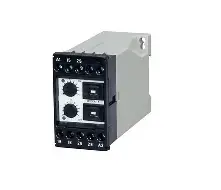
Analog Timers
Analog Timers are simple time-delay devices that use mechanical dials for setting the timing range. They are widely used in basic automation tasks where only a simple delay or interval function is required. Their rugged design ensures reliability in harsh environments.
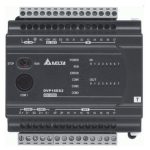
Programmable Logic Controllers (PLC)
PLCs are advanced industrial controllers that allow automation of complex processes. They integrate timers, counters, and logic functions to control multiple machines simultaneously. PLCs are highly versatile, user-programmable, and suitable for industries such as manufacturing, packaging, and process automation.
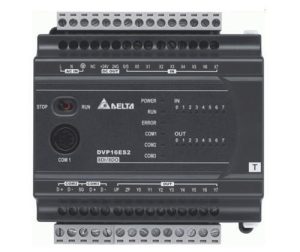
Digital Counters
Digital Counters are electronic devices that count pulses, signals, or events and display them on a digital screen. They are often used with timers to monitor production output, machine cycles, or product quantity, ensuring high accuracy in industrial operations.
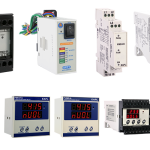
Relay Modules (Electromechanical / Solid State Relays)
Relay Modules act as switching devices that allow low-power timer signals to control high-power loads. Electromechanical relays provide cost-effective switching, while Solid State Relays (SSR) offer silent, high-speed, and long-life operation. They are essential in automation circuits with timers.
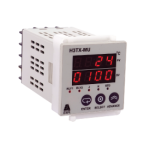
Temperature Controllers
Temperature Controllers regulate heating or cooling processes in industrial machines. When paired with timers, they provide precise control in applications like plastic molding, furnaces, and stamping, ensuring consistent product quality.
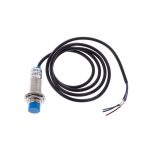
Proximity Sensors / Limit Switches
Proximity Sensors and Limit Switches detect the presence, absence, or position of objects. These sensors act as trigger inputs for digital timers, enabling automated machine cycles, safety interlocks, and counting operations.